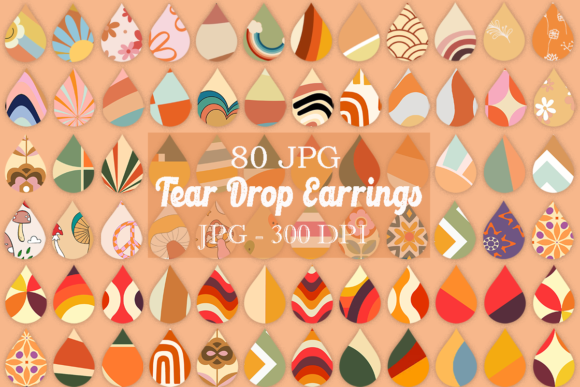
Tiles Seamless Vector: Unlocking Precision and Versatility in Ceramic Tile Design
For decades, traditional ceramic tiles have anchored interior and exterior spaces with enduring elegance—think hand-painted Moroccan zellige, crisp Italian subway tiles, or weathered Spanish encaustic cement patterns. What once required physical sampling, manual repetition, and labor-intensive layout planning has been profoundly transformed by digital design tools. At the heart of this evolution lies the Tiles Seamless Vector: a specialized category of scalable, resolution-independent graphic assets built specifically for tile-based surfaces. Unlike raster images or basic repeats, these vector patterns preserve mathematical fidelity across any scale, orientation, or output medium—making them indispensable for architects drafting façade systems, textile designers adapting motifs to fabric, educators teaching surface pattern theory, and small-batch ceramic studios prototyping custom glaze layouts.
What Makes a Vector Pattern “Seamless” — and Why It Matters
A seamless vector pattern is not merely a repeated image—it’s a mathematically engineered tile unit where edges align perfectly when tiled horizontally and vertically. In an EPS file (Encapsulated PostScript), this alignment is preserved through precise path construction, anchor point placement, and bounding box definition. The result? A single vector tile that can be duplicated infinitely without visible seams, distortion, or pixelation—even when scaled to cover an entire building elevation or reduced to fit a business card background.
Consider a traditional arabesque motif rendered as a Tiles Seamless Vector. Each curve, interlace, and negative space is constructed using Bézier paths—not pixels. When placed in Adobe Illustrator and repeated via the Pattern Options panel, the pattern flows continuously. No gaps appear at tile boundaries; no blurring occurs when exported to a CNC router file for clay slab cutting. This technical integrity directly supports real-world fabrication accuracy—a critical factor whether you’re laying 200 square meters of porcelain in a hospital lobby or laser-etching a 3 cm × 3 cm ceramic coaster.
EPS Format: The Enduring Standard for Professional Tile Workflows
While modern design tools support SVG and PDF, the EPS file remains uniquely suited for traditional ceramic tile applications—especially where precision, compatibility, and archival stability are non-negotiable. EPS is a vector format rooted in PostScript, the page description language that underpins commercial printing, engraving, and industrial manufacturing systems. Its strengths include:
- Device-independent rendering: An EPS file describes shapes and colors mathematically, so it prints identically on a wide-format plotter, a ceramic inkjet printer, or a stone-carving robot—no re-rasterization required.
- Embeddable metadata: Designers can embed Pantone color references, layer names (e.g., “glaze boundary,” “relief cut line”), and even notes for kiln firing sequences—information retained across software platforms.
- Forward compatibility: EPS files created in the 1990s still open reliably in current vector editors, ensuring long-term access to legacy tile libraries used in historic restoration projects.
This reliability matters when working with heritage tile manufacturers who maintain decades-old pattern archives. A restoration team rebuilding a 1920s Art Deco lobby may source original EPS files from a museum’s digital collection, then adapt them—without degradation—to match newly cast clay bodies and contemporary firing schedules.
Architectural Visualization & Specification
Architects use Tiles Seamless Vector assets early in the design process—not just for mood boards, but for accurate material takeoffs and specification documents. By applying a vector tile pattern directly onto a 3D model’s surface in software like Rhino or Revit (via compatible plugins), teams generate photorealistic renderings that reflect true grout spacing, directional laying patterns (e.g., herringbone vs. running bond), and subtle texture variation. More importantly, the same EPS file feeds into technical drawings: the exact repeat unit informs tile cutting schedules, substrate preparation diagrams, and even structural expansion joint placement.
Ceramic Studio Production & Prototyping
In small-batch ceramic studios, vector patterns bridge design and making. A designer sketches a floral motif on paper, traces it digitally, and builds a seamless repeat in Illustrator. That EPS file then drives multiple outputs simultaneously: a laser-cut stencil for sgraffito carving, a UV-printed decal film for underglaze transfer, and a G-code file for robotic slip-trailing on wet clay. Because the vector geometry is consistent across all outputs, there’s zero translation loss between concept and execution—a safeguard against costly misalignment during kiln firing.
Educational Contexts: Teaching Pattern Logic, Not Just Aesthetics
In university-level surface design courses, instructors use Tiles Seamless Vector files to teach foundational concepts: symmetry groups (p1, p2, pmg), tessellation constraints, and the mathematics of translational repetition. Students manipulate anchor points and control handles to observe how altering one edge affects all four boundaries. Unlike static JPEGs, editable vectors make abstract principles tactile—revealing why certain motifs work across scales while others fracture visually. One ceramics educator reports that introducing EPS-based tile exercises increased student comprehension of modular design by over 40%, measured through pre- and post-unit assessments of repeat-unit construction.
Commercial Interiors & Brand Integration
Brands increasingly extend identity into physical environments—not just through logos, but through bespoke tile patterning. A boutique hotel chain might commission a Tiles Seamless Vector inspired by regional flora, then deploy it across pool decks, elevator lobbies, and even staff uniform textiles. Because the EPS file is resolution-agnostic, the same pattern appears crisply on a 5-meter-high ceramic wall panel and cohesively on a woven wool runner—reinforcing brand continuity without requiring separate asset creation for each medium.
Practical Considerations When Selecting or Creating Tiles Seamless Vector Assets
Not all vector tile files deliver equal utility. Before downloading or commissioning a pattern, evaluate these functional criteria:
- Bounding box integrity: Does the pattern tile cleanly when duplicated? Test by placing two copies side-by-side—if lines break or shapes misalign at the seam, the vector wasn’t constructed for true seamlessness.
- Layer organization: Are glaze layers, relief outlines, and grout lines separated into named layers? This enables selective output—for example, sending only the “cut line” layer to a waterjet machine while suppressing decorative elements.
- Color model consistency: Is the file built in CMYK (for print) or RGB (for screen)? For ceramic applications, CMYK + Pantone spot colors are preferable—they map more reliably to ceramic pigment systems and glaze chemistry databases.
- Scalability limits: While vectors scale infinitely, extremely fine details (e.g., hairline cracks in a faux-terracotta pattern) may exceed the resolution threshold of certain output devices. Always verify minimum line weight compatibility with your intended production method.
When creating original Tiles Seamless Vector patterns, start with a square artboard sized to your intended repeat unit (e.g., 100 mm × 100 mm for standard field tile). Use Illustrator’s Transform effect with precise horizontal/vertical offsets to preview tiling behavior in real time—then refine anchor points until the transition is invisible. Avoid raster effects (e.g., drop shadows, grain textures) unless they’re converted to vector equivalents via Image Trace with high-fidelity settings.
Emerging Trends Shaping the Future of Seamless Tile Vectors
Three developments are expanding the relevance of Tiles Seamless Vector beyond conventional uses:
- Generative adaptation: Designers now feed vector tile units into parametric tools (like Grasshopper for Rhino) to algorithmically vary scale, rotation, or color saturation across large surfaces—creating dynamic, non-repetitive fields from a single seamless source.
- AR-assisted installation: Augmented reality apps overlay Tiles Seamless Vector previews directly onto physical walls via mobile devices, allowing contractors to test layout options, grout color contrast, and lighting interaction before committing to material orders.
- Sustainability integration: Eco-conscious tile manufacturers embed environmental data—such as embodied carbon per square meter or recycled content percentage—into EPS metadata. This information surfaces automatically in BIM models and sustainability reports, supporting LEED and BREEAM documentation.
These trends underscore a broader shift: Tiles Seamless Vector is no longer just about visual repetition. It’s becoming a structured data container—one that encodes aesthetic intent, fabrication logic, environmental impact, and spatial intelligence in a single, interoperable file.
Why This Matters Beyond the Screen
In a world increasingly mediated by digital interfaces, the enduring physicality of ceramic tile grounds design in tangible experience—weight, thermal mass, acoustic absorption, tactile variation. The Tiles Seamless Vector doesn’t replace that material reality; it serves as its most faithful digital ambassador. Whether restoring a century-old mosaic, specifying tiles for a seismic zone, teaching symmetry to high school students, or launching a sustainable tile startup, the precision and flexibility embedded in a well-crafted EPS file reduce ambiguity, conserve resources, and honor craft traditions through modern tools. Its quiet power lies not in flashiness, but in reliability—in enabling creators to move seamlessly from idea to kiln, from sketchbook to skyscraper, without compromise.