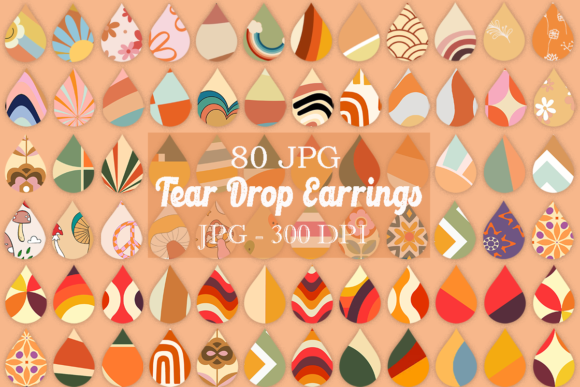
80 Tear Drop Earrings: A Seamless Digital Design Resource for Modern Makers
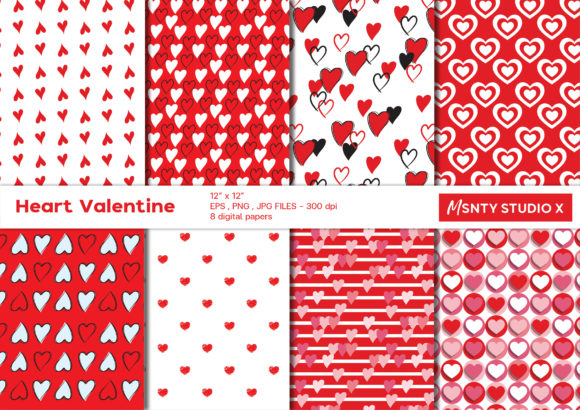
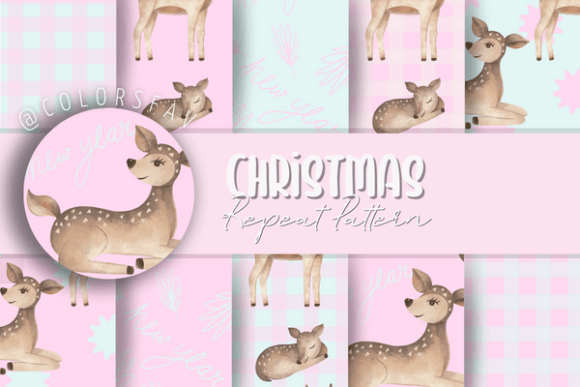
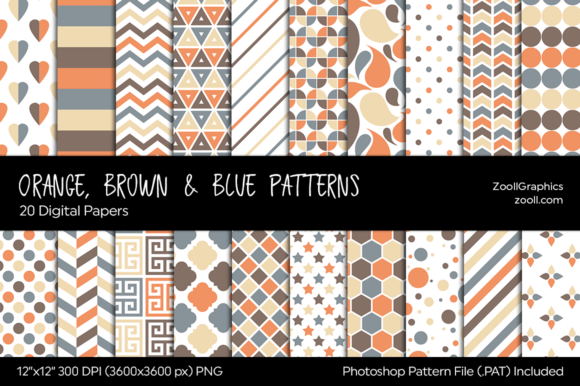
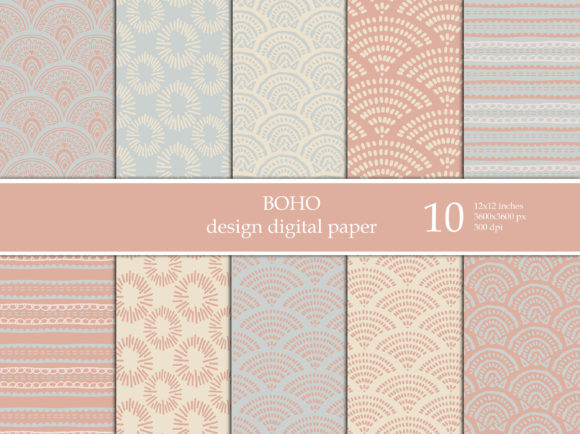
Hi Everyone Welcome to my shop. This is the collection of 80 seamless patterns in Retro Digital Paper theme — a thoughtfully curated, production-ready asset pack designed for creators who value both aesthetic authenticity and operational efficiency. At its core, 80 Tear Drop Earrings isn’t just a set of decorative files; it’s a strategic design tool engineered for versatility, speed, and visual cohesion across physical and digital product ecosystems.
What Exactly Is 80 Tear Drop Earrings?
80 Tear Drop Earrings is a high-fidelity digital pattern library built around a cohesive retro-digital aesthetic — think pixel-adjacent geometry, soft chromatic gradients, subtle halftones, and stylized organic motifs rendered with precision. Despite its evocative name, this collection isn’t limited to jewelry design alone. The “Tear Drop” motif serves as both a visual anchor and a metaphor: each pattern flows seamlessly — no visible edges or breaks — enabling infinite tiling across surfaces of any scale.
The package delivers 80x JPG files, all at 300 DPI, pre-colored and print-optimized. They arrive in a single zipped folder — no layered PSDs, no SVG exports, no licensing friction. Just clean, consistent, immediately deployable assets. While colors on screen may vary slightly from physical output (a universal truth of color management), every file has been calibrated for fidelity across CMYK and RGB workflows — an essential consideration for entrepreneurs producing everything from sublimated leggings to foil-stamped gift wrap.
Why Seamless Patterns Are Reshaping Creative Workflows
In today’s creative economy, time-to-market matters more than ever. Freelancers juggle client revisions, small-batch producers manage inventory constraints, and indie brands compete for attention in saturated digital marketplaces. In that context, 80 Tear Drop Earrings responds directly to a growing demand for design leverage: reusable, brand-aligned visuals that eliminate repetitive groundwork without sacrificing originality.
Consider a product photographer preparing lifestyle shots for a new line of handmade earrings. Instead of commissioning custom backdrops or sourcing generic stock textures, they can apply one of the Retro Digital Paper patterns as a tiled background — instantly reinforcing a nostalgic-yet-contemporary mood. Or imagine a stationery designer launching a limited-run planner series: using these patterns for dividers, cover wraps, and envelope liners ensures visual continuity across dozens of SKUs — all while maintaining full control over color timing and scale.
This reflects a broader industry shift: away from isolated, one-off design assets and toward modular visual systems. Seamless patterns like those in 80 Tear Drop Earrings function as foundational elements — akin to typography families or UI component libraries — enabling rapid iteration while preserving brand integrity.
Retro Digital as Cultural Syntax — Not Just Aesthetic Nostalgia
The Retro Digital Paper theme doesn’t rely on shallow nostalgia. It taps into a deeper cultural syntax — one where analog warmth meets digital precision. Think of the tactile grain of scanned notebook paper overlaid with crisp vector shapes; the gentle flicker of CRT monitor glow translated into soft dithering; or the rhythmic repetition of early web GIFs reimagined as textile-scale repeats.
This hybrid language resonates strongly with Gen X and younger millennial audiences — consumers who grew up between floppy disks and flip phones, and now seek meaning in design that acknowledges technological evolution without romanticizing obsolescence. For marketers and product developers, leveraging 80 Tear Drop Earrings means speaking fluently in that dialect: signaling authenticity, craftsmanship, and intentionality — not just through copy or photography, but through underlying surface texture and rhythm.
Practical Integration Across Product Categories
What makes 80 Tear Drop Earrings especially valuable is its intentional cross-category utility. Unlike niche design packs built for a single use case, this collection was developed with real-world manufacturing constraints and creative workflows in mind:
- Earrings & Jewelry Packaging: Apply patterns to earring card inserts, velvet pouch linings, or branded tissue paper — enhancing perceived value without increasing per-unit print costs.
- Party Decor & Event Branding: Scale patterns to fit balloon garlands, photo booth backdrops, or cake toppers — maintaining resolution clarity even at 6-foot widths.
- Apparel & Soft Goods: Use seamless tiling to generate yardage for tote bags, baby towels, or pillow covers — eliminating seam-line mismatches during cutting and sewing.
- Digital Products: Integrate into Canva templates, Notion dashboard headers, or printable sticker sheets — ensuring consistency between physical merchandise and online presence.
- Home & Lifestyle Goods: Print onto mouse pads, tumblers, or notebook covers with confidence — the 300 DPI resolution supports both direct-to-garment printing and traditional offset processes.
Each application benefits from the same underlying advantage: no manual repeat alignment, no tile-edge artifacts, no color-shift surprises across substrates. That reliability translates directly into fewer production delays, lower revision cycles, and stronger visual storytelling — whether you’re a solo maker fulfilling Etsy orders or a boutique studio managing wholesale timelines.
Meeting Evolving Expectations — From Consumers to Platforms
Today’s buyers don’t just evaluate products — they assess entire experiences. A customer purchasing a pair of handcrafted tear-drop earrings expects packaging that feels intentional, social media visuals that reflect cohesive branding, and downloadable extras (like matching Zoom backgrounds or printable care cards) that extend engagement beyond the transaction.
Platforms reinforce this expectation. Etsy’s algorithm favors listings with strong visual consistency across main image, variants, and supplemental graphics. Instagram’s Reels and Pinterest’s Idea Pins reward content that uses unified color palettes and repeating motifs — precisely what 80 Tear Drop Earrings enables at scale.
Meanwhile, print-on-demand services like Printful and Gelato now support automated pattern tiling across hundreds of SKUs. When your base design files are already seamless, optimized, and pre-sized for common templates, integration becomes plug-and-play — reducing technical overhead and accelerating launch velocity.
Design Integrity Meets Operational Clarity
There’s a quiet professionalism embedded in 80 Tear Drop Earrings — one that understands the difference between decoration and infrastructure. These aren’t “pretty pictures.” They’re precision-engineered visual components, tested for scalability, legibility, and reproducibility. The decision to deliver only JPGs (not editable vectors or layered files) reflects a commitment to accessibility: no software barriers, no version compatibility issues, no learning curve.
That simplicity aligns with how modern creators actually work. A graphic designer may use Adobe Illustrator for layout, but they’ll drop in a JPG pattern as a placed image — adjusting opacity, blending mode, or scale in seconds. A craft entrepreneur using Cricut Design Space imports the same file without needing to ungroup layers or trace outlines. A marketer building a Mailchimp campaign embeds it directly into HTML email templates — no conversion required.
In short, 80 Tear Drop Earrings removes friction without removing flexibility. It gives professionals the freedom to focus on strategy, storytelling, and service — not file management.
Looking Ahead — Patterns as Strategic Assets
As generative tools evolve and AI-assisted design becomes commonplace, the value of human-curated, context-aware assets grows — not diminishes. Algorithms can produce infinite variations, but they rarely understand the subtle calibration needed for a pattern to read beautifully on brushed aluminum tumblers *and* matte-finish greeting cards. That nuance comes from experience, testing, and deep familiarity with material behavior.
80 Tear Drop Earrings represents a forward-looking approach to digital asset creation: one rooted in real production needs, audience resonance, and cross-platform coherence. It’s not about chasing trends — it’s about equipping creators with tools that hold up under scrutiny, scale with ambition, and adapt to tomorrow’s channels — whether that’s AR try-ons, NFC-enabled packaging, or next-generation textile printing technologies.
For professionals, entrepreneurs, and passionate makers alike, this collection offers more than visual flair. It offers clarity. Consistency. Confidence. And above all — creative momentum, uninterrupted.