Pink Plaid Digital Paper: A Practical Guide for Designers and Crafters
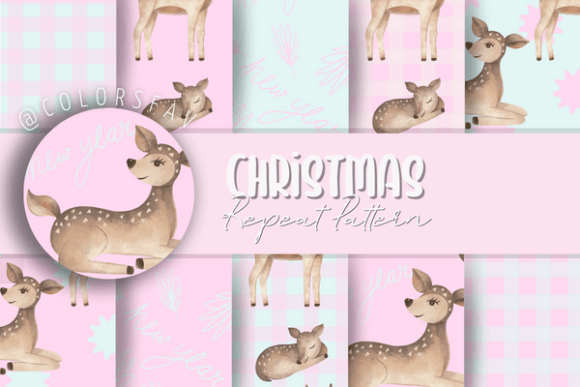
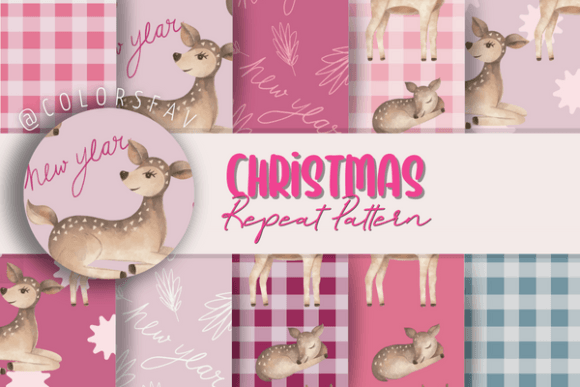
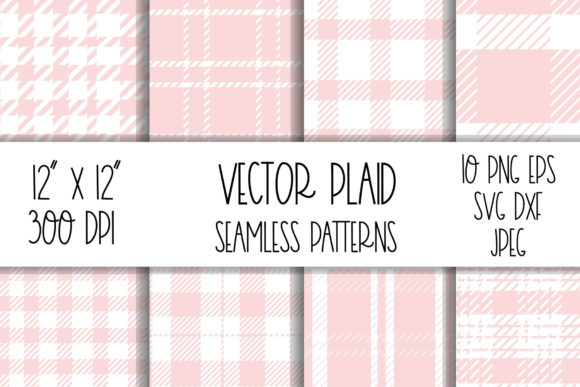
Pink Plaid Digital Paper refers to a curated set of high-resolution, seamless vector and raster patterns featuring soft-to-vibrant pink plaid motifs. Unlike single-use clipart or generic textures, this collection is built for versatility—each pattern repeats flawlessly across surfaces, making it suitable for both physical production (like fabric printing or gift wrap) and digital applications (such as social media graphics or web backgrounds). The set includes 10 distinct variations, delivered in multiple formats—PNG, JPEG, SVG, EPS, and DXF—and rendered at 3600 × 3600 pixels (12×12 inches at 300 DPI), ensuring crisp output whether scaled for business cards or wall murals.
What Makes This Pink Plaid Digital Paper Distinct?
The value of this Pink Plaid Digital Paper lies not just in color or motif, but in its technical execution and format diversity. Seamless tiling is non-negotiable for professional results—poorly aligned edges become obvious when repeated across fabric or packaging. These patterns are tested for true seamlessness, with consistent line weight, balanced spacing, and harmonized pink tones ranging from blush and rose to fuchsia and dusty mauve. That range allows designers to match brand palettes without heavy editing.
Format flexibility matters too. SVG and EPS files preserve vector scalability—ideal for logos, monograms, or laser-cut stencils—while high-res PNGs and JPEGs support quick integration into Canva, Photoshop, or Cricut Design Space. The inclusion of DXF is notable: it’s uncommon in pattern packs aimed at crafters, yet essential for precise cutting workflows used in vinyl decals, leather goods, or custom phone cases. Not all plaid-themed digital papers offer that level of cross-platform readiness.
How It Compares With Other Pattern Options
When evaluating digital pattern resources, users often encounter three broad categories: free online patterns, subscription-based design libraries, and boutique pattern bundles like this Pink Plaid Digital Paper set.
- Free patterns—often found on design blogs or resource sites—tend to be low-resolution (72–150 DPI), lack vector options, and rarely include commercial licenses. They’re useful for personal projects or mood boards, but impractical for print-on-demand or client work where resolution and legal clarity matter.
- Subscription services (e.g., Creative Market subscriptions or Adobe Stock plans) provide breadth: thousands of patterns across themes and styles. But access is time-bound, and licensing terms vary per asset. You may pay monthly for patterns you’ll only use once—or miss niche aesthetics like coordinated pink plaid because the service prioritizes volume over curation.
- Boutique bundles, like this Pink Plaid Digital Paper set, trade breadth for intentionality. They’re designed around a specific visual language and production-ready specs. You get consistency across the 10 patterns—same scale, same DPI, same licensing scope—without sifting through unrelated assets.
This distinction becomes especially relevant for small businesses. A cosmetic brand launching limited-edition packaging might need cohesive, on-brand patterns for boxes, tissue paper, and social banners. Relying on mismatched free downloads risks visual fragmentation; a subscription library may deliver inconsistent plaid density or hue saturation. A purpose-built set like this Pink Plaid Digital Paper offers predictable harmony.
Strengths and Real-World Fit
The strongest use cases for this Pink Plaid Digital Paper align with projects requiring both aesthetic cohesion and technical reliability:
- Print-on-demand creators using platforms like Printful or Redbubble benefit from the 300 DPI resolution and CMYK-friendly pink tones—no color shift when converted for textile or paper printing.
- Scrapbookers and cardmakers appreciate the PNG transparency and layered file organization (where applicable), enabling easy overlays on photos or hand-lettered quotes.
- Small-batch product designers (e.g., enamel pin makers or sticker shops) use the SVG/EPS files to import cleanly into vector editors, then adjust stroke weight or spacing without pixelation.
- Social media managers building branded templates can drop these patterns directly into Canva or Figma as background layers—no resizing or tiling guesswork needed.
It also works well for hybrid workflows. For example, a wedding stationery designer might use one pattern for digital save-the-dates (JPEG), another as a foil-stamped motif on letterpress invitations (SVG), and a third as repeat-print fabric for table runners (EPS exported to textile software). That cross-format utility isn’t guaranteed with most pattern collections.
Tradeoffs and Limitations to Consider
No digital pattern set is universally ideal—and understanding its boundaries helps avoid misalignment. This Pink Plaid Digital Paper excels within its defined scope, but has natural constraints:
- Limited color variation: While the pinks are thoughtfully graded, the set does not include grayscale, monochrome, or complementary accent colors (e.g., navy or sage). If your project requires tonal contrast beyond pink-on-white or pink-on-cream, additional editing or supplemental assets may be needed.
- No editable source files (e.g., AI or PSD): Though EPS and SVG are fully scalable, they don’t contain layered design elements like individual plaid stripes or color groups. Designers who prefer to tweak base geometry—not just recolor—will find those capabilities absent.
- Niche theme focus: Its strength is also its boundary. If you regularly work with geometric, floral, or abstract patterns, this set won’t replace a broader library. It’s best approached as a targeted tool—not an all-in-one solution.
Also worth noting: while the license permits commercial use (including resale on physical goods and digital templates), it doesn’t extend to reselling the patterns *as-is* on marketplaces like Etsy without significant modification. That’s standard practice for most digital pattern licenses—but something to verify before scaling production.
When to Choose This Pink Plaid Digital Paper—and When to Look Elsewhere
This Pink Plaid Digital Paper is a strong fit if you:
- Need immediate, production-ready pink plaid patterns without trial-and-error sourcing;
- Work across both digital and physical outputs and require format flexibility;
- Value consistency in scale, resolution, and tone across multiple designs;
- Are building a cohesive seasonal or brand-specific launch (e.g., Valentine’s Day products, millennial-pink branding, or bridal collections).
It’s less suited if you:
- Require full creative control over every vector node or layer;
- Need patterns in non-pink palettes or radically different scales (e.g., oversized architectural plaids or micro-dot variants);
- Prefer ongoing access to evolving pattern libraries rather than one-time purchases;
- Are working under tight budget constraints and only need one or two uses—free or low-cost alternatives may suffice for limited scope.
In practice, many experienced designers keep a mix: a foundational set like this Pink Plaid Digital Paper for reliable go-to assets, supplemented by occasional single-pattern purchases or subscription access for variety. The key is matching tool to task—not defaulting to the largest library or the flashiest preview image.
Final Considerations Before Use
Before integrating any digital pattern—including this Pink Plaid Digital Paper—test it in your intended context. Import a sample into your design software at actual size. Check how it tiles across a mock-up of your final output (e.g., a 12×12 inch wrapping paper sheet or a 16:9 Instagram Story). Verify color rendering in both RGB (for screens) and CMYK (if printing). And review the license terms carefully—not just for permissions, but for attribution requirements or prohibited uses.
Patterns are infrastructure, not decoration. When chosen with attention to technical fit and creative alignment, they streamline workflow, reinforce brand voice, and reduce revision cycles. This Pink Plaid Digital Paper delivers that reliability within its domain—making it a thoughtful addition for anyone whose work intersects with pink, plaid, and precision.