Rainbow Scrapbook Paper: 10 Seamless Boho Patterns for Real Creative Work
Imagine needing a cheerful yet sophisticated background for your small business’s new product launch—something that feels handmade but prints flawlessly on premium cardstock. Or picture a teacher designing classroom reward certificates that actually make kids smile, not just tolerate. Or a wedding planner pulling together custom banners, digital invites, and fabric-printed napkins—all under one cohesive, joyful visual theme. That’s where Rainbow Scrapbook Paper steps in—not as generic clipart or overused stock textures, but as a thoughtfully crafted set of 10 seamless boho patterns with soft, cute rainbows that hold up beautifully across scales, surfaces, and formats.
What This Rainbow Scrapbook Paper Actually Is (and Isn’t)
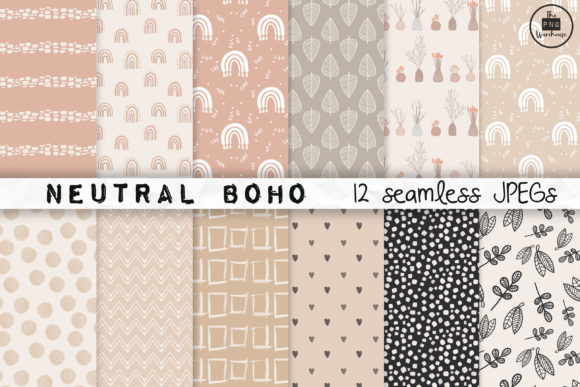
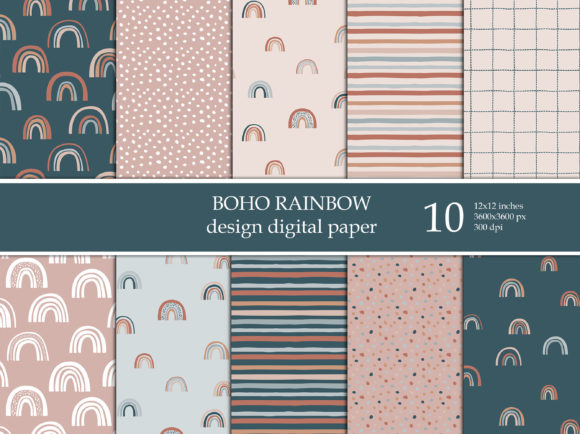
This isn’t a single printed sheet you’ll find at a craft store. It’s a digital paper pack: 10 high-resolution, repeatable patterns designed specifically for real-world use—not just decoration. Each file is 12×12 inches at 3600×3600 pixels, 300 dpi, RGB color mode. That means they’re print-ready for physical projects like greeting cards, stickers, or wedding stationery—and screen-optimized for digital scrapbooking, Canva templates, or social media banners. The “seamless” part matters: no visible tile edges when tiled across large areas (like a 24×36 poster or a full-page invitation suite). The “boho” aesthetic leans into gentle curves, subtle texture, and intentional imperfection—no harsh gradients or synthetic-looking rainbows. These are patterns you can trust to feel warm, inclusive, and quietly uplifting.
Where People Are Actually Using These Patterns Right Now
Small business owners reach for these when updating their brand’s visual language without hiring a designer. A ceramicist uses one rainbow pattern as the background for her Instagram Story highlights—clean, recognizable, and aligned with her earthy-but-playful voice. A subscription box startup layers another over product photography for email headers, giving consistency without monotony. Because each pattern is distinct but tonally matched, they work as a system—not just a one-off backdrop.
Educators and homeschoolers rely on them for printable resources that don’t scream “clipart.” Think: behavior charts with soft rainbow borders, reading logs with subtle patterned headers, or editable lesson plan templates that look polished during parent-teacher conferences. One kindergarten teacher told us she prints them on sticker paper and cuts them into mini rewards—kids love the colors, and she loves that they don’t clash with her neutral classroom palette.
Wedding professionals use these for more than just invitations. A planner recently used three different patterns across save-the-dates (digital), ceremony programs (printed on textured linen paper), and fabric-printed table runners (via Spoonflower). The continuity gave the whole event a handmade, intentional feel—without requiring custom illustration.
Freelancers and content creators embed them into client deliverables: podcast show notes with branded headers, Notion dashboard backgrounds that reduce visual fatigue, or printable planning kits sold on Etsy. Because they’re RGB and 300 dpi, they adapt cleanly—no reworking needed when switching from screen to print.
Why “Cute Rainbows” Work Better Than You’d Expect
Let’s be honest: rainbows can easily tip into cutesy overload or feel too literal for professional contexts. These patterns avoid that by treating the rainbow as texture—not a focal shape. One pattern uses faint arched bands spaced wide apart, almost like watercolor washes. Another integrates tiny rainbow dots into a larger organic line drawing. That subtlety lets them function as neutral-but-friendly backdrops—similar to how a muted terracotta or sage green works in interior design. They add warmth without demanding attention. That’s why marketers use them behind testimonials, bloggers behind quote graphics, and therapists behind printable self-care worksheets.
What to Consider Before Downloading or Using Rainbow Scrapbook Paper
First: Check your software compatibility. These are high-res JPEG or PNG files—no layered PSDs or vector formats. If you need editable elements (like changing rainbow colors individually), this isn’t the pack for you. But if you’re using Canva, Affinity Designer, Photoshop, Cricut Design Space, or even Microsoft Word, they’ll drop in cleanly.
Second: Think about scale and context. A delicate pattern may get lost on a large banner unless enlarged intentionally. Test print a corner first—or zoom in digitally—to confirm detail holds up where you need it. For fabric printing, verify your printer’s minimum repeat size; all 10 patterns comfortably tile at 12×12 inches, but some services require larger minimums.
Third: Consider color accuracy. RGB files look vibrant on screen but may shift slightly when printed—especially on uncoated paper or budget printers. If color matching is critical (e.g., for brand guidelines), order a test print before bulk production. Most users find the shift minimal and even preferable—softer, more tactile than screen-bright.
Real Projects That Started With Just One Pattern
- A freelance writer created a downloadable “Focus Kit” for remote workers—featuring printable to-do lists, habit trackers, and weekly planners—all unified by one rainbow scrapbook paper as the header background. She priced it at $7 and sold over 300 copies in two months.
- A nonprofit literacy program used a low-contrast rainbow pattern on their donor thank-you cards. Volunteers reported recipients commenting on how “calm and hopeful” the design felt—proving joy doesn’t require loud visuals.
- A DIY enthusiast printed one pattern onto iron-on transfer paper and applied it to denim tote bags for a school fundraiser. The repeat meant no awkward seams, and the cotton held the ink beautifully after washing.
Not Just for “Crafters”—This Fits Into How People Actually Live and Work
You don’t need to call yourself a scrapbooker to benefit from Rainbow Scrapbook Paper. You might be a nurse designing patient education handouts, a pastor creating bulletin inserts, a grad student formatting a thesis appendix, or a mom labeling pantry jars with a label maker and sticker paper. What ties those uses together isn’t hobby identity—it’s the need for something ready-to-use, emotionally resonant, and technically reliable. These patterns meet that need without asking for expertise, time, or compromise.
They’re not flashy. They won’t go viral. But they do something quieter and more valuable: they help people show up consistently—with warmth, clarity, and care—in the materials they share with others. Whether it’s a child’s birthday card, a client proposal, or a classroom poster, that consistency builds trust. And sometimes, the most meaningful creative choice is simply choosing a background that says, gently and clearly: This matters. You matter. Let’s begin.