Brown Giraffe Skin Animal Print Paper: A Versatile Digital Resource for Creative Professionals and Educators
Animal print patterns have long held a distinctive place in visual design—not as fleeting trends, but as enduring motifs rooted in texture, contrast, and organic rhythm. Among these, giraffe skin stands apart: less aggressive than zebra, more grounded than leopard, and richly dimensional without overwhelming complexity. The Brown Giraffe Skin Animal Print Paper exemplifies this balance—offering warmth, subtlety, and tactile authenticity in digital form. Unlike generic “animal print” assets that flatten natural variation into repetitive tiles, this collection prioritizes biomimicry: irregular spot distribution, nuanced tonal gradients, and realistic parchment-like depth.
What Makes This Collection Distinctive?
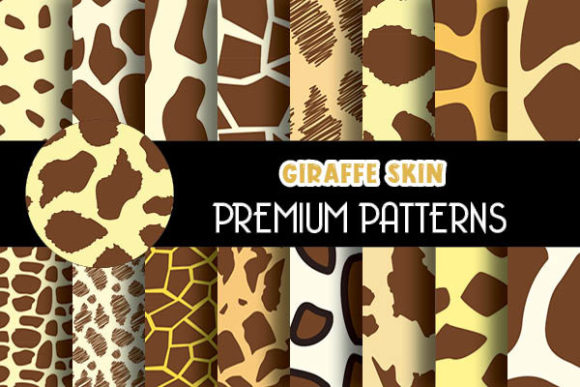
The set comprises 16 Giraffe Skin Animal Prints digital paper backgrounds, each uniquely calibrated—not merely recolored variations, but individually composed interpretations. Some emphasize warm umber and toasted sienna tones ideal for earth-inspired branding; others lean into cooler taupe and charcoal undertones for modern editorial layouts. Each file maintains a resolution of 300 DPI at 12×12 inches, ensuring crisp reproduction whether scaled for a business card or enlarged for a classroom bulletin board.
Crucially, these are not clipart-style overlays. They function as true paper backgrounds: seamless, tileable, and optimized for layering. Designers can apply subtle drop shadows or soft glows without visible seams; educators can print them on standard cardstock for tactile learning tools; crafters can cut them with precision die-cut machines without pixelation at edges. The Brown Giraffe Skin Animal Print Paper variant serves as the anchor tone—grounded, versatile, and widely compatible with both warm and cool palettes—making it an intuitive starting point for cross-disciplinary use.
Creative Professionals: From Brand Identity to Packaging
Graphic designers increasingly seek pattern libraries that support brand storytelling—not just decoration. A boutique skincare line launching a “Savanna Renewal” collection might pair the Brown Giraffe Skin Animal Print Paper with hand-drawn botanical illustrations and minimalist typography. The print’s organic irregularity reinforces authenticity, subtly communicating natural sourcing without literal imagery. Similarly, interior designers use these papers as base textures in mood boards—layering fabric swatches and material samples over a giraffe skin background to assess tonal harmony before physical prototyping.
In packaging design, where shelf impact meets sustainability messaging, these prints offer an alternative to metallic foils or embossing. A coffee roaster using compostable kraft bags can digitally overlay a muted giraffe skin texture to evoke origin (East African highlands) while maintaining eco-conscious aesthetics. Because the files are provided in PNG and JPEG formats—with transparent and white-background options—integration into existing Adobe Creative Cloud or Affinity workflows is frictionless.
Educators and Curriculum Developers: Pattern Literacy and Cross-Curricular Tools
Pattern recognition is foundational across disciplines: biologists study camouflage evolution; mathematicians explore tessellation and fractal geometry; art teachers introduce value, contrast, and repetition. The 16 Giraffe Skin Animal Prints digital paper backgrounds serve as rich, real-world datasets for such inquiry. For example, students can import one pattern into image analysis software, isolate spot clusters, and calculate average spacing—bridging biology and statistics. In early childhood settings, printed cards featuring varied giraffe skin tones support color discrimination exercises, especially for learners with color vision differences, thanks to the high luminance contrast between spots and background.
One educator in Arizona uses the Brown Giraffe Skin Animal Print Paper as a base for student-created “ecosystem journals.” Learners draw native species onto the textured background, then annotate adaptations—e.g., how spot size correlates with thermoregulation in savanna climates. The tactile quality of the printed paper (when used on matte stock) enhances sensory engagement, supporting multisensory learning frameworks endorsed by recent research in educational neuroscience.
Hobbyists and Small Business Owners: Scalable Craft and Merchandising
Scrapbookers value consistency in tone and scale—critical when assembling multi-page albums. These digital papers eliminate the frustration of mismatched physical sheets from different batches. A user in Ontario reported using three variants from the set to chronicle a family safari trip: lighter tones for journal pages, mid-tone versions for photo mats, and a darker variant for title spreads—creating visual narrative arc without switching brands or suppliers.
For makers selling on platforms like Etsy or Shopify, licensing clarity matters. These files include commercial-use rights—meaning a ceramicist can print the Brown Giraffe Skin Animal Print Paper onto ceramic decals for mugs, or a stationery seller can embed it into printable invitation suites. No attribution is required, reducing administrative overhead. Notably, the patterns avoid overly saturated hues, ensuring faithful color reproduction on home printers—a frequent pain point cited in maker forums.
Technical Considerations for Optimal Use
While accessibility and ease-of-use are central, informed application requires attention to technical nuance. First, color mode matters. All files are delivered in RGB for screen use—but if printing professionally, convert to CMYK *after* placing in layout software (e.g., InDesign), not in isolation. This preserves intended contrast and avoids unintended desaturation.
Second, scale perception shifts with context. A giraffe skin pattern may appear bold on a smartphone wallpaper but recede gracefully as a subtle background in a presentation slide. Test at intended output size: zoom to 100% in your editor, then step back three feet—does the texture enhance or distract? The Brown Giraffe Skin Animal Print Paper’s mid-range spot density makes it especially forgiving here, functioning equally well at 5% opacity for watermarking or full intensity for textile mockups.
Third, layering strategy affects legibility. When overlaying text, avoid placing light type directly over light spots. Instead, use a subtle 1–2 pt stroke or 85% opaque white rectangle behind body copy. Alternatively, select a variant where spot darkness consistently falls below 40% brightness—several in the set were designed specifically for this purpose.
Why Giraffe Skin Resonates Beyond Aesthetics
Giraffe skin patterns aren’t arbitrary. Their biological function—thermoregulation via networked blood vessels beneath irregular melanin deposits—mirrors principles valued in human-centered design: efficiency, responsiveness, and adaptive structure. This resonance isn’t metaphorical. Architects studying passive cooling cite giraffe skin microstructures in biomimicry research; data visualization specialists reference its non-repeating distribution when designing accessible chart textures.
That depth informs why the 16 Giraffe Skin Animal Prints digital paper backgrounds avoid rigid symmetry. Each pattern was generated using procedural algorithms trained on high-resolution field photography—not stock photo databases—ensuring biological fidelity. One variant, for instance, mimics juvenile giraffe patterning: smaller, denser spots with softer edges, useful for projects targeting younger audiences or evoking growth themes.
Integration Into Broader Creative Ecosystems
These papers don’t exist in isolation. They interoperate with broader design systems: pair the Brown Giraffe Skin Animal Print Paper with serif typefaces like Merriweather for academic publications, or with geometric sans-serifs like Poppins for tech startup decks. In Figma or Sketch libraries, they slot naturally alongside neutral grays and curated accent palettes—no need for custom color matching.
For researchers compiling literature reviews, the patterns provide non-distracting backgrounds for annotated PDFs, improving visual scanning during long reading sessions. A neuroscientist at McGill University noted reduced eye fatigue when using a low-contrast giraffe skin variant as a slide background during 90-minute seminars—attributing it to the pattern’s “biophilic frequency,” aligning with studies on nature-derived visuals and cognitive load.
Ultimately, the strength of this collection lies in its restraint. It doesn’t shout. It grounds. Whether anchoring a luxury brand identity, scaffolding a student’s scientific observation, or adding quiet sophistication to handmade goods, the Brown Giraffe Skin Animal Print Paper—and its 15 complementary variants—offer substance beneath surface appeal. They reflect a growing expectation across professions: that digital assets must be both technically robust and meaningfully resonant.